Quantum Physics
Beginner-friendly, scientifically honest explanations of the strangest — and best-tested — theory in physics.
Core concepts
Start anywhere. Each topic links to a full explainer with a knowledge check.
Matter & Energy
How quantum theory reframes what particles and fields actually are.
ScienceWave–Particle Duality
Why quantum objects show wave-like and particle-like behavior depending on the experiment.
ScienceUncertainty
Heisenberg's principle: a structural fact about quantum states, not a statement about clumsy measurement.
ScienceSuperposition
States as weighted combinations — and what that does and doesn't mean.
ScienceEntanglement
Correlations with no classical explanation. Verified. Not usable for faster-than-light messages.
ScienceMeasurement
What happens when a quantum system meets a detector — and why this is still debated.
ScienceDecoherence
How environments wash out quantum behavior — the bridge between quantum and classical worlds.
ScienceQuantum Fields
The deeper picture: particles as excitations of underlying fields.
InterpretationInterpretations of QM
Copenhagen, Many-Worlds, pilot waves, QBism — same math, different stories about reality.
What quantum physics does not prove
Quantum mechanics is spectacularly well tested — and spectacularly misused. To keep your thinking clean:
It does not prove that thoughts create reality. "Observation" in physics means physical interaction with a measuring device, not human attention or intention.
It does not prove manifestation, telepathy or "quantum healing." No experiment links quantum superposition to wishing outcomes into existence.
It does not prove that consciousness is quantum. Quantum theories of mind exist, but they remain unverified hypotheses — we label them as such in our Consciousness hub.
It can still inspire. Uncertainty, complementarity and possibility are powerful metaphors for self-reflection — as long as we never confuse metaphor with mechanism. That distinction is the entire editorial spine of this site.
Latest related thinking
Continue with recent Quantum Self essays connected to this topic.

AI, Quantum Computing and the Search for Human Potential
Read the full article on the main Quantum Self blog.

Q-Day Is Coming: How Quantum Computing Could Break the Internet
Read the full article on the main Quantum Self blog.
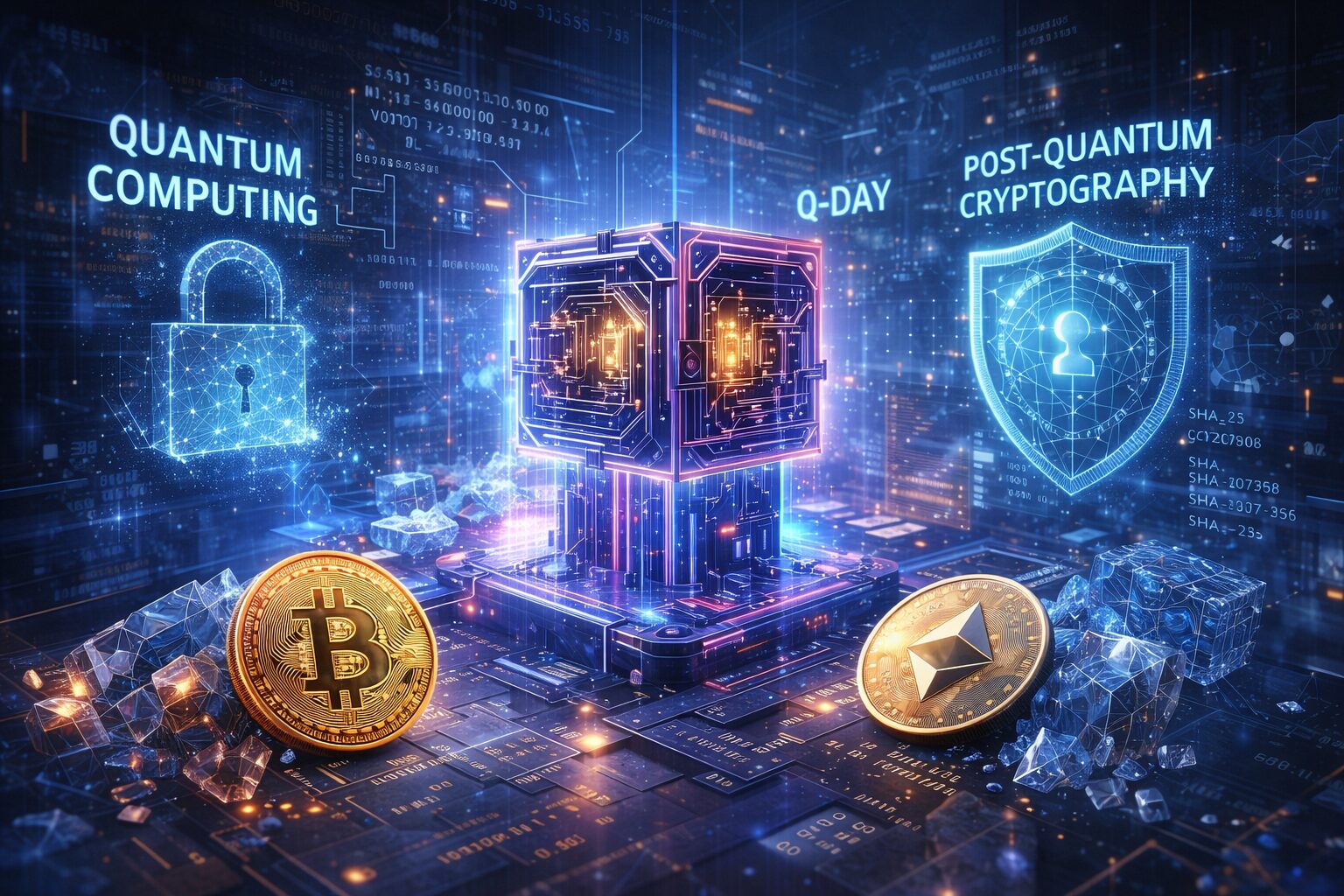
Why Quantum Computing Could Be a Threat and Opportunity for Crypto
Read the full article on the main Quantum Self blog.
Related videos
Selected explainers and lectures that extend the ideas on this page.